
School Based Aba Therapy Programs: A Comprehensive Guide for 2026
Table of Contents
What Families Should Know About School Based ABA Therapy Programs
School based ABA therapy programs bring Applied Behavior Analysis into the classroom, where behavior analysts work alongside educators to help children with autism learn skills in the setting where they spend their day. As experts at the Association for Behavior Analysis International note, this approach blends behavioral goals with classroom routines so progress happens where kids live and learn.
School ABA therapy supports consistency across environments because BCBAs and school staff collaborate to carry strategies from therapy into everyday school activities. We see this model in action across Missouri and Illinois, where families choose school-based support to reinforce communication, routines, and independence during the school day.
ABA therapy at school matters as much as who pays for it and what you get out of it, so let us take a closer look at exactly what they do.
Insurance Coverage and the Benefits of School Based ABA Therapy Programs
Once parents learn about school-based ABA therapy programs, their next question tends to be whether these services are covered and where they can take place. Before any treatment starts we work with each family to clearly determine whether their child's insurance covers ABA services as well as what places children might receive them at.
Are school based ABA therapy programs covered by private insurance or Medicaid?
Coverage for school based ABA therapy programs depends on your specific plan and state rules. Our team verifies each family’s benefits up front, so there are no surprises and you can focus on your child’s progress instead of paperwork. We guide you through the insurance process step by step, answering questions and helping you understand your share of costs before services begin.
Is in school ABA therapy available for children in both public and private schools?
Yes. Our clinicians work together with teachers in public & private schools around Missouri as well as portions of Illinois to provide therapy that fits naturally into each child’s school day. No matter whether your child attends a public district program or a private academy, we coordinate with the school team to make sure therapy goals support classroom learning.
What are the benefits of enrolling in a school based ABA therapy program?
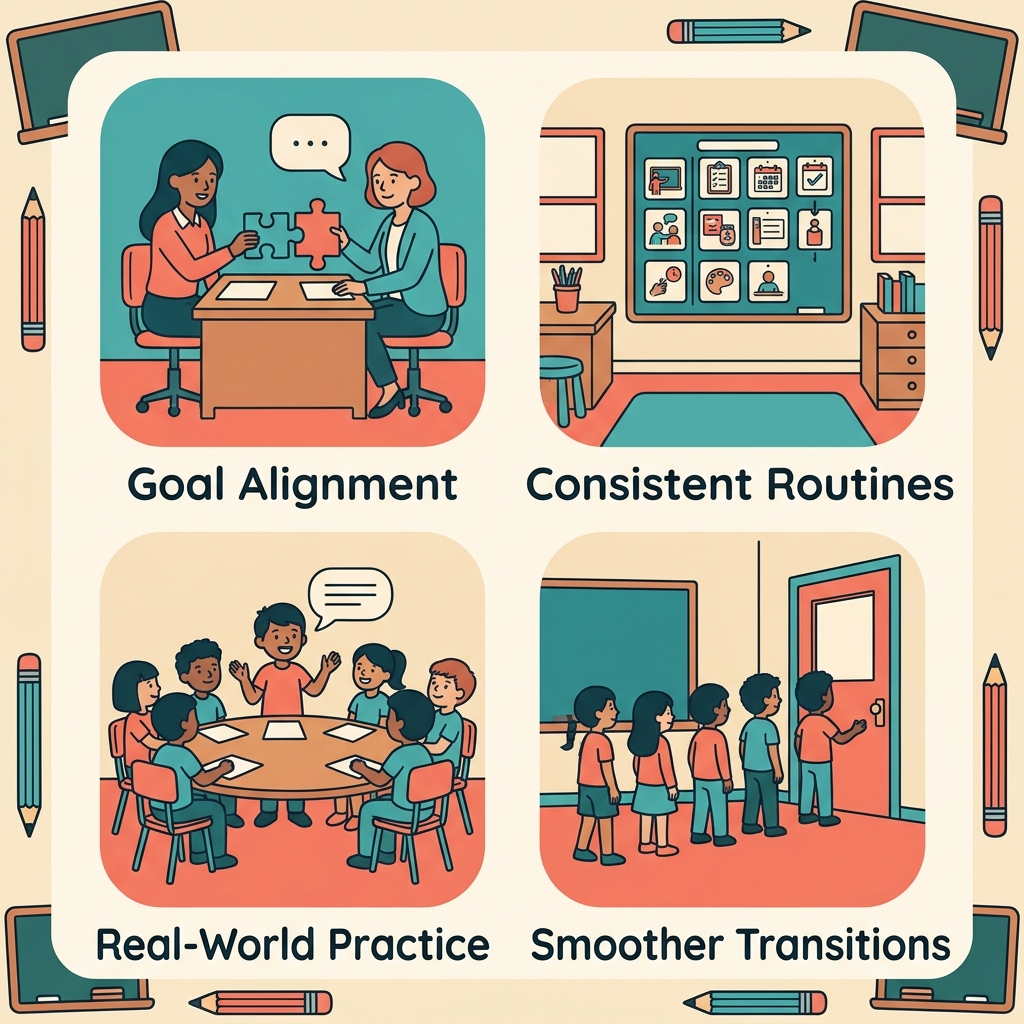
- Real-world practice: Children practice communication and social skills where they use them every day, in the classroom.
- Smoother transitions: Consistent routines between therapy and school reduce anxiety and help children move smoothly from one activity to the next.
- Goal alignment: BCBAs collaborate directly with teachers and aides so therapy goals reinforce what your child is learning at school.
It’s been shown that school-based ABA works. The Association for Behavior Analysis International provides guidance on what behavior analysts and educators can do to support children with autism, and models from Washington state have delivered school-based early intensive behavioral intervention for more than 20 years.
These benefits make these programs a practical choice for many families. If you have questions about coverage or how we partner with your child’s school, email us at info@heartcoreaba.com.
What Happens During In School ABA Therapy Sessions
Once insurance coverage is settled, many parents wonder what their child’s day actually looks like in a school-based program. Across the state, these programs are built around each child’s personalized plan, blending support into the classroom so learning stays the focus.
What does a typical in-school ABA therapy session look like for a child?
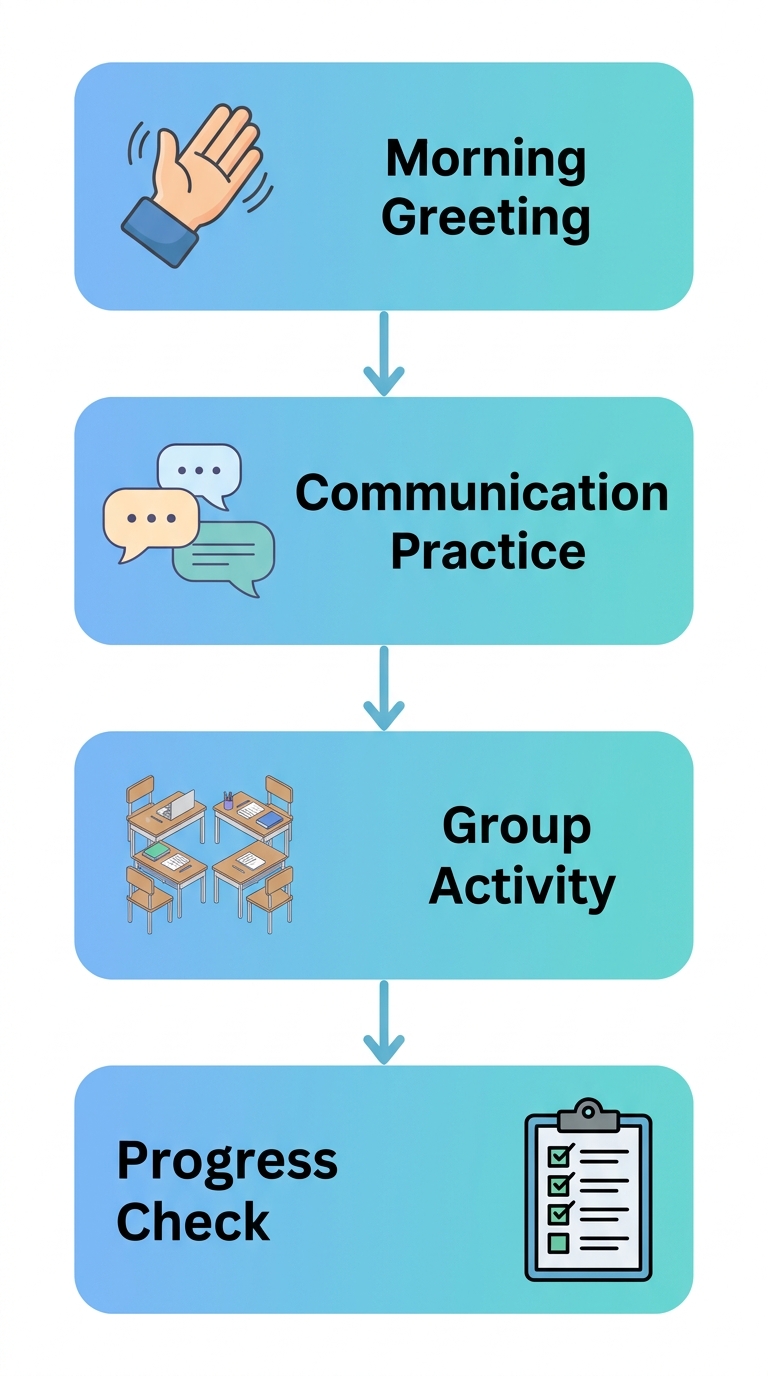
Your child walks through the door, ready to go into circle time. There is an RBT sitting next to him at his table helping him say hi to his peers and listen to what the teacher is saying. All day long he’s using simple prompts and reinforcement to get him communicating, whether it's asking for a turn with the blocks or sharing a story at show-and-tell. This session follows his school schedule. When there is group work going on in class that the therapist can see needs support, she helps break up that big task into smaller components, and celebrates the tiny wins with your kiddo. Before lunch, they might practice greetings with other children or model how to ask for help during a transition.
How do RBTs provide in-school ABA therapy without disrupting the classroom environment?
All of our RBT’s learn how to “blend” seamlessly into the classroom environment. This means they know how to give subtle, discrete prompting while providing reinforcement naturally so as to make their presence seem unobtrusive. We time our support based on what is happening in the classroom rather than pulling children out for lessons. The RBT will work with kids who have been identified as needing support for transitioning between activities, for example, or helping them remember how to ask for help, whether this be raising hands or speaking up in class. They’re there in the background, walking alongside your child, teaching them appropriate behavior and giving them a boost of confidence all without taking attention away from learning.
How do therapists collaborate with classroom teachers, and what role does a BCBA play?
Effective school support starts with clear communication and shared goals. Our BCBAs design each child’s therapy plan based on classroom observations and teacher input, ensuring the goals align with what’s happening in the classroom. RBTs receive real-time guidance from the BCBA, who visits the school regularly to adjust strategies and troubleshoot challenges. They work closely with teachers, giving ongoing feedback as needed, making adjustments as required and solving problems together. School staff check in often to see how the child has responded and offer additional practice using the same skills.
IEPs, Eligibility, and Advocating for ABA Therapy at School
The IEP describes what will occur at school in terms of services and supports, including those that may be needed for children on the spectrum with respect to their behaviors. Under IDEA, this service delivery occurs because its purposes focus on achieving specific academic outcomes as opposed to goals written into private ABA programs.
To access school-based ABA strategies, parents should start by requesting an evaluation in writing and bringing documentation of their child’s current goals and progress to IEP meetings. Ask how behavior strategies used in outside therapy can be adapted for the classroom—collaboration between your child’s ABA team and school personnel strengthens consistency across settings. This alignment ensures that school-based ABA programs support daily learning and help your child generalize skills.
- request a written evaluation to begin the IEP process
- bring progress notes from your child’s current ABA goals to the meeting
- ask about adapting strategies used in private therapy for classroom use
Our team offers school-based ABA therapy programs that coordinate with your child’s school team to align goals and support daily learning. Once services and goals are in place, the focus shifts to tracking progress and adjusting plans as needed to keep your child on the path to success.
Session Schedules and Progress Tracking in the Classroom
Once you've got quality school-based ABA therapy going on, we work alongside your child's teachers to make sure there's consistency for the kid when he's in his school classes vs. when he's at his ABA sessions. We'll sit down with the child's instructor, work together as a team to get all their approaches aligned. Make sure everyone has the same goals, uses similar tactics and strategies so that it will be seamless when a child is being taught privately through his ABA provider as well as whatever else might be going on through school. school-based ABA therapy programs
Information on progress will be updated according to the established goals based on collected data, which are then adjusted whenever necessary in order to monitor any new developments. In addition, we will inform you about these results on a weekly basis. Finally, our BCBA will also schedule regular meetings with school staff in order to make sure everyone involved has the same idea on how things have evolved so far. That way information gathered at school will be shared with home care and IEP teams. The BCBA may draw inspiration from practices applied within private schools as well as those coming from public schools to improve methods used for their kids.
When meeting with your ABA provider ask how data collected during school based sessions will be shared with his/her IEP team and other home-based providers. This helps make sure that everyone works together to benefit your child.
Still Have Questions? We're Here to Help
Navigating school-based ABA therapy programs can raise many questions for families, and we understand that. If you're curious about our school-based services, intake process, or program options across Missouri, our team is ready to help. Reach out to us at info@heartcoreaba.com Monday through Friday, 8:00 AM to 5:00 PM — no pressure, just support. We’re happy to answer your questions and guide you through the next steps.
